Workbench and resource guide
SAND Raiders of Sophie Crafting Recipes: Workbench Guide & What to Craft First
Use this crafting recipes guide to turn recovered resources into a raid plan. It explains how to read workbench recipes, organize Trampler and ammunition priorities, and avoid treating an Early Access recipe list as permanent patch law.
Quick answer: This SAND Raiders of Sophie crafting recipes guide starts with a recipe index by use: Trampler movement and control, cargo, weapons and ammunition, repairs, field consumables, and unlocks. Check the current station, ingredients, weight, energy and reachability before crafting; Early Access values can change.
SAND Raiders of Sophie crafting recipes: start with the recipe index
In SAND: Raiders of Sophie, crafting is part of a longer risk loop: enter a raid, find or recover useful resources, decide which items deserve storage space, use a workbench or builder when the game allows it, and bring the result back safely. A good crafting page therefore needs more than a flat list of names. It needs to tell you what the item changes, what it competes with, and when making it is worth delaying an extraction.
The strongest early decision is usually not maximum firepower. It is a dependable chain between the crew, the Trampler, the repair reserve and the return route. A heavy module can consume weight and energy margin; ammunition can occupy cargo that could have held a repair resource; a consumable can be valuable only when the next objective makes its effect relevant. Read every recipe as a decision about the next raid, not as a collection task by itself.
This guide uses recipe families and decision rules because SAND is an Early Access game and exact requirements can change. Use the current in-game workbench and builder values as the final authority. The page is designed to answer where to start, how to compare workbench recipes, and what to verify after an update without inventing a permanent all-recipes spreadsheet.
SAND crafting recipes by use
Use this crafting recipes index as a planning map. It groups the decisions players usually need first while leaving exact numbers to the current in-game interface instead of freezing Early Access values into a permanent list.
| Recipe family | What it changes | What to check first | Best timing |
|---|---|---|---|
| Trampler movement and control | Adds or improves the stations that let the machine move, steer or keep the crew connected. | Check weight, energy, reachability and whether the new compartment blocks the route to the pilot. | Before armor, cargo expansion or a longer objective. |
| Trampler storage and cargo | Creates room to bring resources and crafted results back from a raid. | Compare added capacity with turning, movement margin and the value of the planned loot loop. | After the core machine can already enter, move, repair and extract. |
| Weapons and ammunition | Supports a chosen combat role instead of adding weight without a usable firing arc. | Match the ammunition to the weapon, reserve storage, crew access and a retreat route. | Before a contested objective or when the return route needs deterrence. |
| Repairs and recovery | Restores the systems that keep the Trampler mobile and the crew able to leave. | Reserve materials for movement, power, steering and access before cosmetic upgrades. | Before Storm Dive or any route where a damaged return would be expensive. |
| Field consumables | Provides a short-term answer to visibility, combat, healing or route-control problems. | Ask whether the next objective actually benefits from the effect and whether storage is available. | Only when the objective and escape plan make the effect likely to matter. |
| Blueprint or workbench unlocks | Expands what the crew can prepare, but may add a new resource sink or dependency. | Record where the unlock came from and verify the current recipe after each patch. | When the unlock solves a repeated bottleneck, not merely because it is new. |
How to read workbench recipes
When a workbench or crafting screen is open, read from left to right: item identity, required resources, resulting role, and the cost to carry or use it during the raid. If the screen shows a recipe that you cannot currently make, treat that as a planning signal. It may point to a missing resource, an unavailable unlock, a station dependency or a build that is not meant for the current run.
Do not confuse a visible recipe with a guaranteed source. A recipe can be known while one of its materials is scarce, route-specific or more valuable for repairs. Before you spend the last useful component, compare the recipe with your Trampler's current movement margin and the extraction guide's return threshold. The correct craft is often the one that keeps options open rather than the one with the largest description.
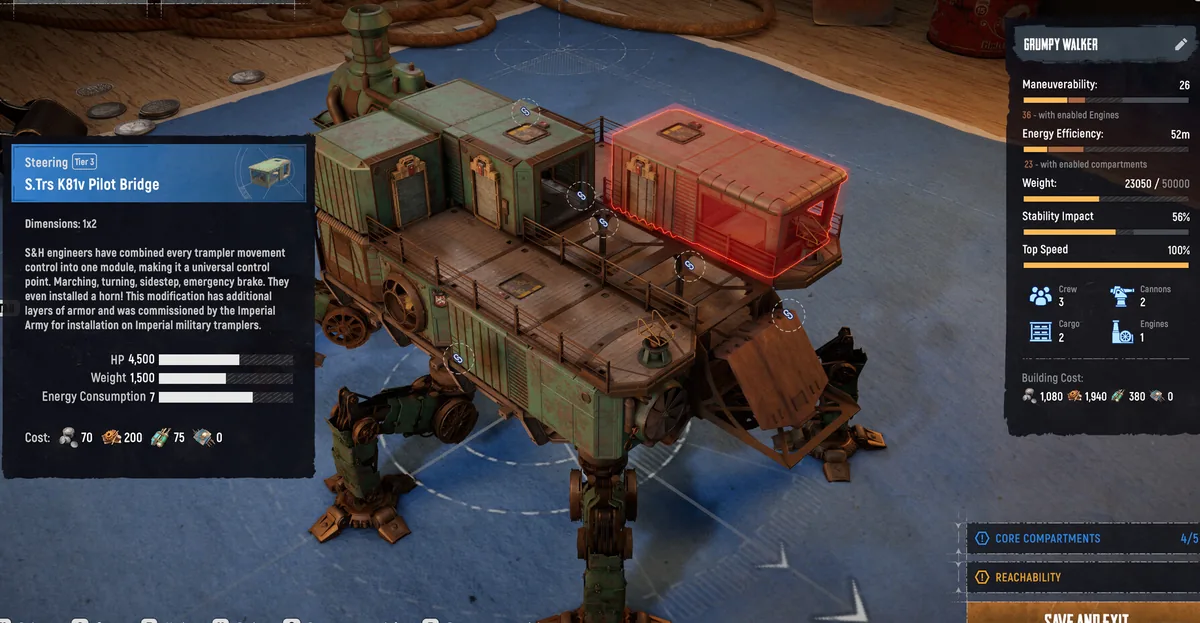
The official Steam media also shows why builder recipes need context. A selected pilot bridge exposes its own cost and stats while the Trampler panel shows total weight, energy efficiency, stability, crew, cannons, cargo and engines. Those values are a reminder to inspect the whole machine after adding a module.
Confirm the station
Identify whether the item belongs to a player workbench, a Trampler builder, a repair flow or a field interaction. Do not assume every recipe uses the same station.
Read the dependency chain
If the result needs another module, ammunition type or repair reserve, note that dependency before spending the visible ingredients. A craft that cannot be used immediately may be cargo weight without raid value.
Compare the opportunity cost
Ask what the same resources could repair, power or protect. The answer changes between a short Voyage Mode run, a contested loot route and Storm Dive.
Recheck after saving
After the recipe or module is applied, review total weight, energy, stability, reachability, storage and crew access. Builder acceptance is only the first test.
Record the patch context
If a recipe cost or unlock is important, capture the date and game version in your own notes. Early Access guides age quickly when they present values without a timestamp.
Resources first: what to keep for crafting
A resource is not valuable only because it appears in a recipe. It is valuable when it solves the next failure that would end the raid. Before opening every container, identify the run's main constraint: movement, repairs, ammunition, storage, a station unlock or a safer return. This keeps the crafting plan tied to an objective instead of turning the Trampler into a slow warehouse.
Use the map guide to create a short loop with a landmark and a return bearing. Then set a stop rule: leave when the required resource is secured, when storage becomes expensive to risk, or when damage reduces the return margin. The more a resource competes with repair material or ammunition, the more important it is to decide before the inventory is full.
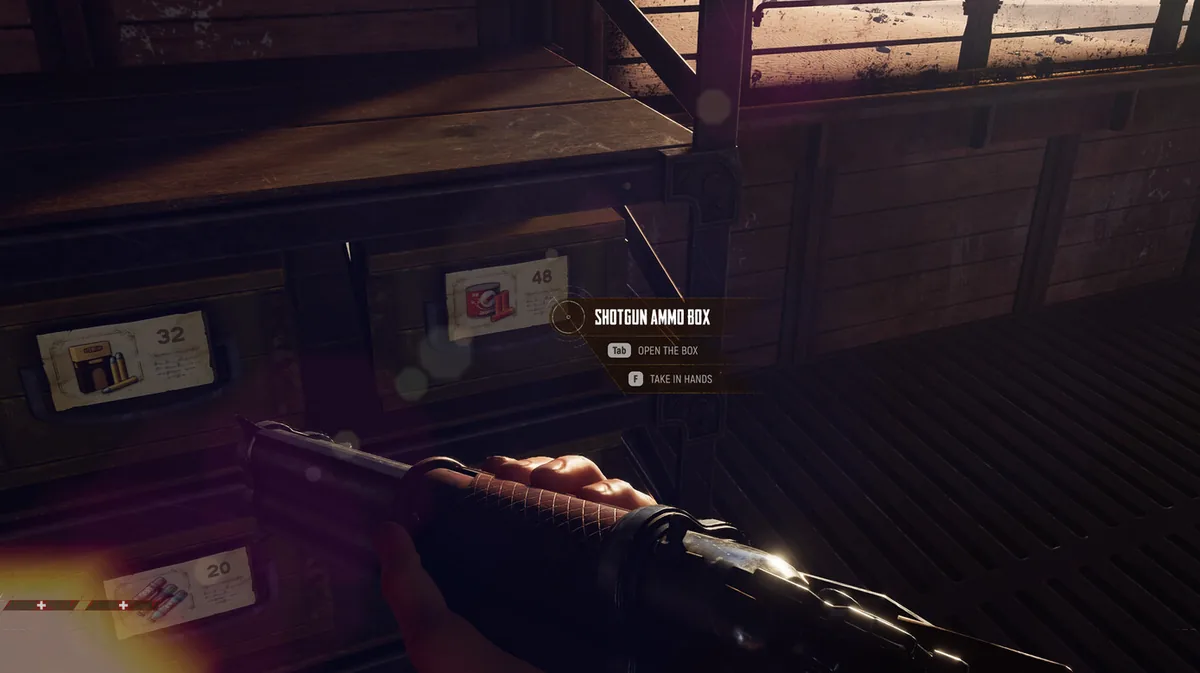
The same principle applies to weapons and field items. The official Steam screenshot showing a Shotgun Ammo Box is useful context for recognizing ammunition as a concrete loot and preparation decision. It does not prove a universal drop table or a permanent crafting cost, so use it to plan categories and checks rather than to promise exact spawn rules.
Keep a repair reserve
Do not convert every useful component into an optional upgrade when the machine still lacks a safe movement and access margin.
Separate use-now from store-later
A resource for the current objective has a higher priority than a rare-looking item with no immediate station, recipe or extraction reason.
Leave before the plan becomes fragile
A full hold, damaged Trampler and untested recipe can turn a successful gather into a loss. Crafting value is realized only after the crew returns.
What to craft first in three common situations
There is no universal best crafting order. Choose the smallest recipe chain that answers the current problem, then keep enough margin to extract.
First raid or rebuilding a basic machine
The goal is a working entry, pilot route, movement system and recovery path rather than a large combat platform.
Priority rule: Craft or install the dependencies that make the Trampler usable, then test reachability before adding luxury modules.
Preparing for a known loot objective
The goal is to carry the right storage and a repair margin without making the return route slower than the loot is worth.
Priority rule: Prepare the resource and capacity chain for one objective, not every possible recipe on the map.
Expecting contact or a contested route
The goal is to preserve a retreat option while making the crew's chosen weapon and ammunition role reliable.
Priority rule: Check firing arcs, ammunition, crew access and an open exit before spending the last reserve on damage.
Storm Dive or a high-risk return
The goal is recovery after damage and uncertainty, not the highest possible loadout screen.
Priority rule: Prioritize movement, power, steering, repairs and a short route home; postpone optional upgrades.
Build a resource route around the recipe
A recipe becomes useful when its ingredients fit a route. Start at the Trampler, identify the nearest landmark that can guide the return, and choose one resource objective. Do not chain a second stop merely because it is nearby. The extra crossing may expose the crew, consume ammunition or leave the machine carrying a repair problem that the original plan did not budget for.
When a component is hard to find, use the map guide's landmark and rerouting principles instead of treating one community report as a fixed spawn rule. Mark what you actually observed, what the current interface confirms and what remains uncertain. This turns a recipe search into a repeatable scouting note that can survive an update.
Finally, align the craft with extraction. If making the item fills storage, increases weight or delays the return, the correct decision may be to bank the resource and craft after the raid. A safe inventory is worth more than a perfect workbench screen left behind in the desert.
- Set the target recipe before leaving the Trampler.
- Choose one primary resource objective and one fallback objective.
- Keep the return bearing visible while looting or checking a station.
- Leave when the repair, storage or visibility margin drops below the agreed threshold.
- After extraction, verify the current recipe and update your own notes with the date.
Early Access recipe notes and source limits
SAND: Raiders of Sophie is an Early Access game, so an old crafting list can become misleading even when its item names remain familiar. Treat exact costs, unlock order, station names, drop locations and stack sizes as version-sensitive. Recheck the in-game interface and official Steam updates before planning a long farming session around one number.
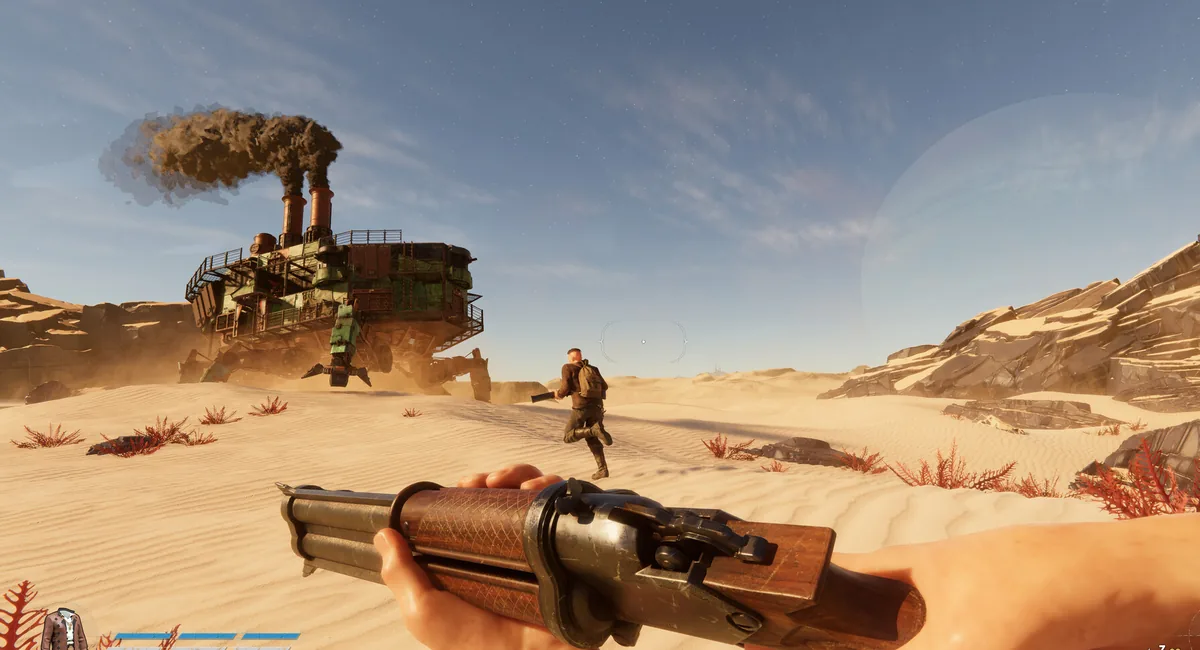
This page intentionally separates stable decision rules from values that need live confirmation. It does not claim that the three screenshots are a complete recipe database, and it does not present third-party search results as official drop tables. If an update changes a recipe, keep the same workflow: identify the station, compare the resource opportunity cost, review Trampler stats, and test the result on a short route before committing to a high-risk raid.
SAND Raiders of Sophie crafting recipes FAQ
Where do I make crafting recipes in SAND Raiders of Sophie?
Use the current in-game screen that exposes the relevant workbench, builder or repair interaction. The station depends on the recipe family. If an item is visible but unavailable, check its dependency and resource requirement rather than assuming it is a bug.
Does this page list every SAND Raiders of Sophie recipe and exact cost?
No. It is a practical recipe index and planning guide. Because SAND is in Early Access, exact costs and unlocks should be verified in the current build. The page avoids presenting unverified third-party numbers as permanent facts.
Where should I make a smoke bomb in SAND Raiders of Sophie?
Treat the smoke bomb question as a current station-and-recipe check: look for the item in the relevant workbench or field-crafting interface, confirm the required materials, and decide whether the next route benefits from its visibility effect. Do not spend the last repair resource just to carry a situational consumable.
What should I craft first for a Trampler?
Start with the smallest chain that gives the crew a reachable entrance, pilot route, movement, power and repair path. Review weight, energy, stability, cargo and access after each module. Add weapons or extra storage only after the machine can reliably return.
How do I keep crafting recipes useful after a patch?
Record the date and build when you confirm a cost or unlock, then recheck the current workbench after an update. Keep stable principles such as repair margin, route planning and opportunity cost separate from values that can change.
How do I craft in SAND Raiders of Sophie?
Open the current workbench, builder or repair interaction for the recipe family, confirm the required materials and inspect the result's weight, energy, reachability and use. A visible recipe may still depend on an unlock or station condition.
Why can’t I craft a SAND Raiders of Sophie recipe?
Check the current station, missing ingredients, unlock dependency and build version first. If the recipe is visible but unavailable, record the exact message and compare the current interface with official update notes before assuming the page or game is wrong.
Official references and media context
Official Steam media and the developer site were checked on August 11, 2026. Screenshots are used as editorial game context; they are not presented as a complete official recipe database.