Encounter and extraction guide
SAND Raiders of Sophie Dreadnought Guide: Spawn, Keys & Extraction
The Dreadnought is a high-risk late-raid objective, not a normal landmark. Use the mode, timing, key-chain and return-route checks below to decide whether the doors are worth the trip.
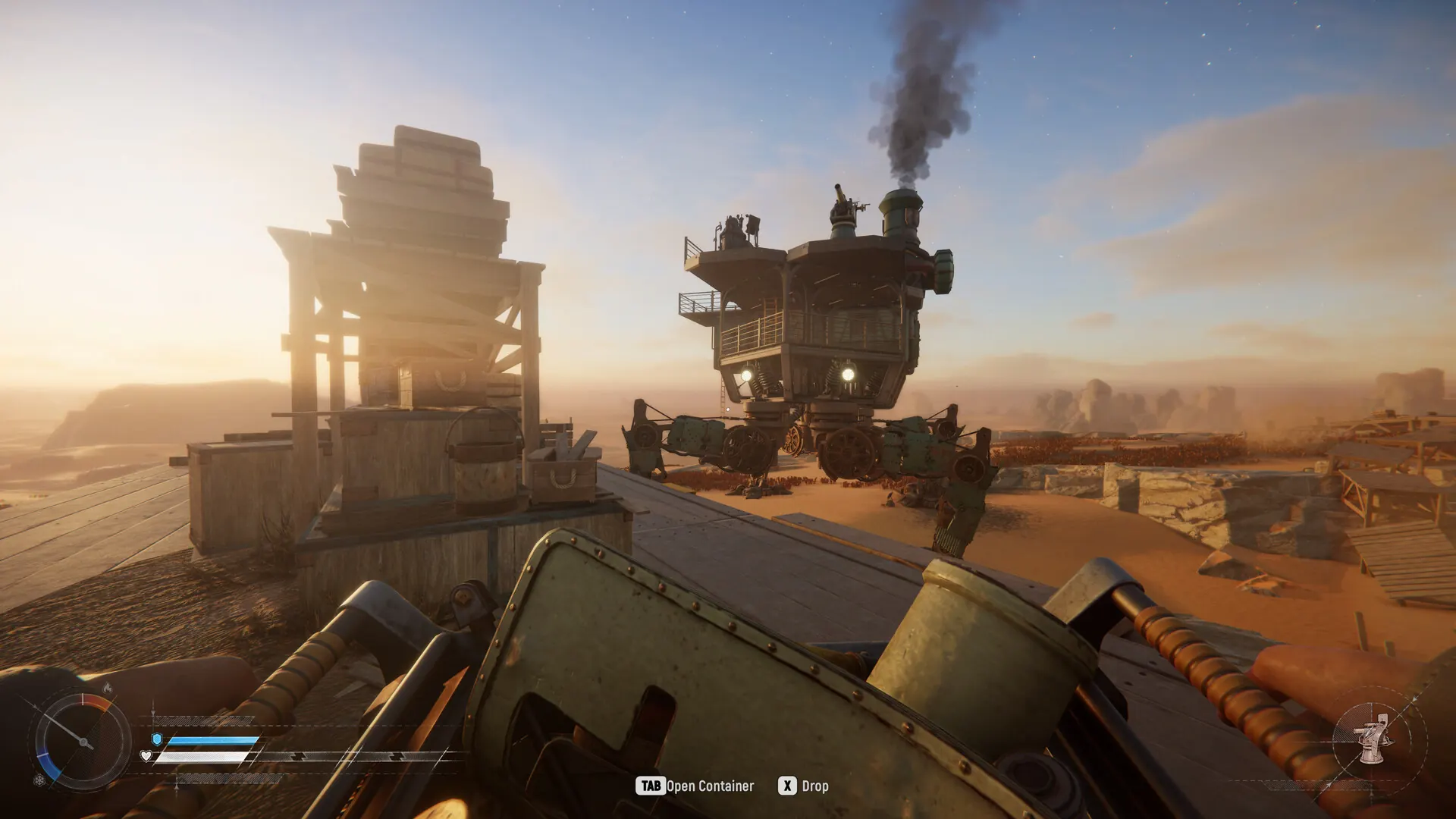
Quick answer: Current community guides describe the Dreadnought as a late Storm Dive objective with a multi-door key chain and a high-value extraction decision. Do not search for it in Voyage Mode, do not treat a single video as permanent proof of every spawn rule, and do not enter until the Trampler still has repair, turning and return-route margin.
What the Dreadnought means for a SAND raid
The Dreadnought matters because it changes the purpose of a raid. A normal loot loop asks whether an item is worth carrying back. A Dreadnought run asks whether the crew can reach a contested end-of-raid objective, solve enough of the door chain, survive the exposure, and still leave with the loot. That is a route and risk problem, not simply a combat check.
The available evidence is mixed in an important way. Official SAND: Raiders of Sophie pages establish the Early Access game, its desert setting, Trampler machines and extraction-shooter context, but they do not publish a stable Dreadnought table. Community guides and discussions fill in practical details such as Storm Dive timing, door colors and spawn clues. Those details are useful, but they should be read as version-sensitive reports rather than permanent official rules.
This guide therefore separates what is a reliable planning principle from what still needs a live check. You can prepare a Trampler with an exit heading, preserve repair supplies, assign a scout and stop chasing the objective when information becomes worse than the potential loot. You should not promise a fixed coordinate, a guaranteed spawn in every match or a universal key location unless a current first-party update confirms it.
How to tell whether the Dreadnought spawned
Use several signals together. A single sound, screenshot or map rumor is not enough to justify crossing the whole map with a damaged Trampler.
Start with the mode check
Community reports consistently associate the Dreadnought with Storm Dive rather than the calmer Voyage Mode loop. Confirm the current mode and end-of-raid objective before spending time looking for it. If the mode prompt does not support the encounter, turn the run into a normal extraction instead of forcing the search.
Read the late-raid objective
The strongest practical clue is the late extraction context. When the final objective or extraction area changes, pause and compare the map, mission text and nearby terrain. The Dreadnought is treated by current guides as a destination that becomes relevant near the end of a Storm Dive, not as a random early landmark.
Use terrain and silhouette clues
Search from a ridge or durable landmark rather than driving directly through open sand. A large structure, unusual smoke, a heavy silhouette or a new route pressure can tell you that the objective is nearby, but visual recognition is safer than assuming one exact coordinate from an old guide.
Ask whether the information is current
Dreadnought videos and Reddit answers can be useful for discovering the encounter, yet they often describe a particular patch, mode or squad route. Compare their timestamp and terminology with the current official Steam news trail before treating a door order or spawn condition as universal.
Treat absence as a decision, not an automatic bug
If the final objective does not appear, first check mode, party state, live update status and the current extraction prompt. Record the exact message and time before calling it an outage. The server-status guide is the better destination when many players report the same missing objective.
Dreadnought keys and the five-door chain
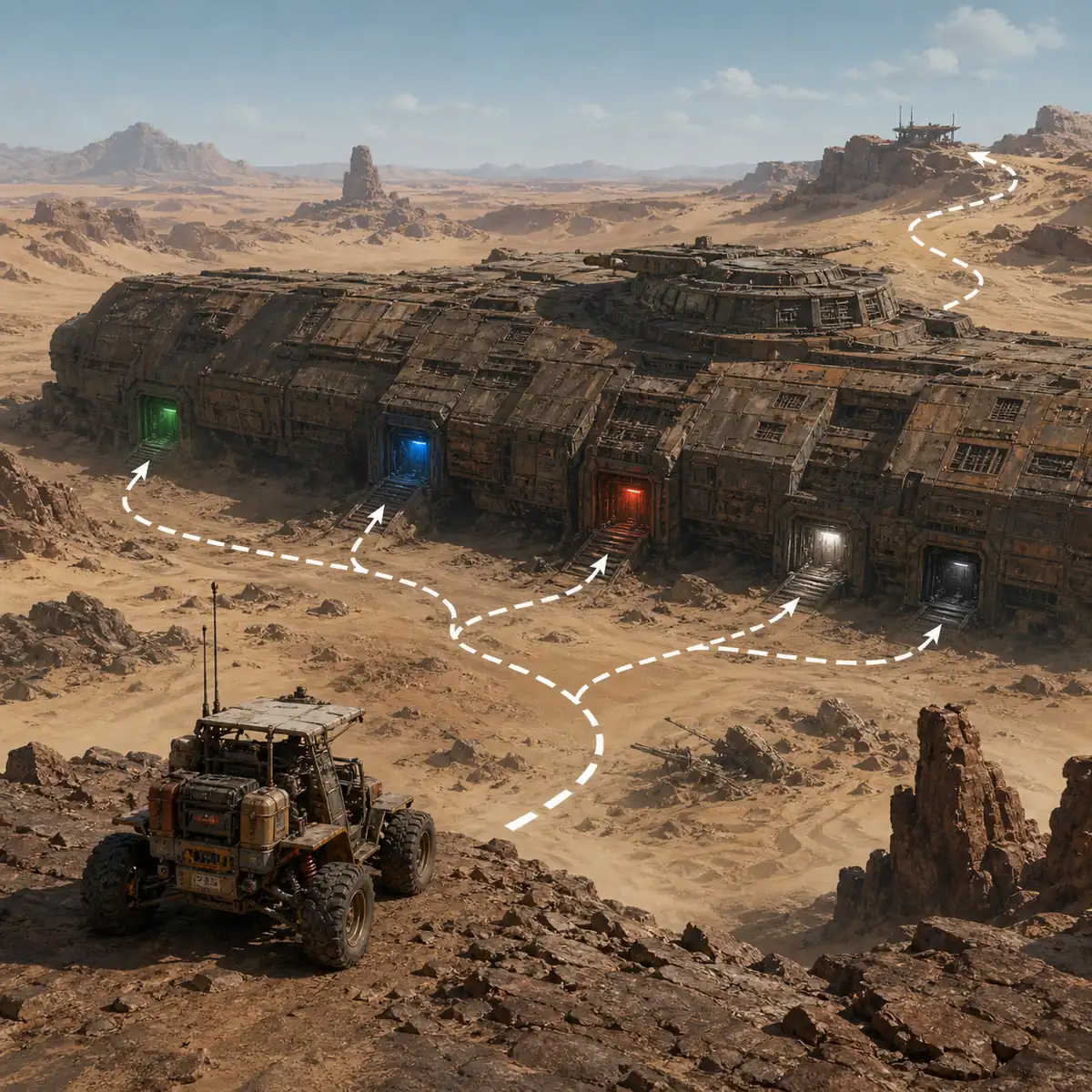
Several community walkthroughs describe a colored-door chain, commonly discussed as green, blue, red, white and black. Use the table as a planning checklist, not as an official permanent loot database.
| Stage | What to check | Evidence boundary | Raid decision |
|---|---|---|---|
| Green key | Confirm the first accessible door and whether the key is part of the current objective route. | Community route reports; exact room and container can change. | Enter only if the Trampler still has an uncomplicated retreat. |
| Blue key | Check the next interior or warehouse-style search area without splitting the squad too far. | Video and guide descriptions are not a substitute for a current in-game marker. | Keep one player watching the exterior and the return line. |
| Red key | Treat the red-door step as an exposure increase: more time inside means more risk outside. | The order is repeated by community sources, but room names and loot claims vary. | Leave with partial value if the squad loses information or repairs. |
| White key | Check the final approach, remaining supplies and whether another crew has already taken the obvious line. | Current public guides do not provide a stable official coordinate list. | Do not let the next door consume the route margin needed to extract. |
| Black key | Treat the Black Key as the highest-commitment step and verify the exit before opening the last target. | The Black Key has its own search demand, but exact acquisition and value are version-sensitive. | A key is not profit until the crew can carry it out. |
Prepare the Trampler before you chase the objective
A Dreadnought attempt should begin in the workshop, not at the first locked door. The Trampler guide recommends thinking in terms of reachable, repairable and extractable builds. That logic matters even more here: storage and weapons increase the upside, but a machine that cannot turn, retreat or survive a damaged leg turns a successful key run into a stranded loot pile.
Before leaving, agree on a capacity trigger and a retreat trigger. The capacity trigger is the point where the next item is less valuable than preserving the current cargo. The retreat trigger can be low repair reserve, an exposed approach, a split squad, a missing key or a second crew appearing on the return route. Stating those rules before the fight prevents one player from turning a cautious run into an accidental full commit.
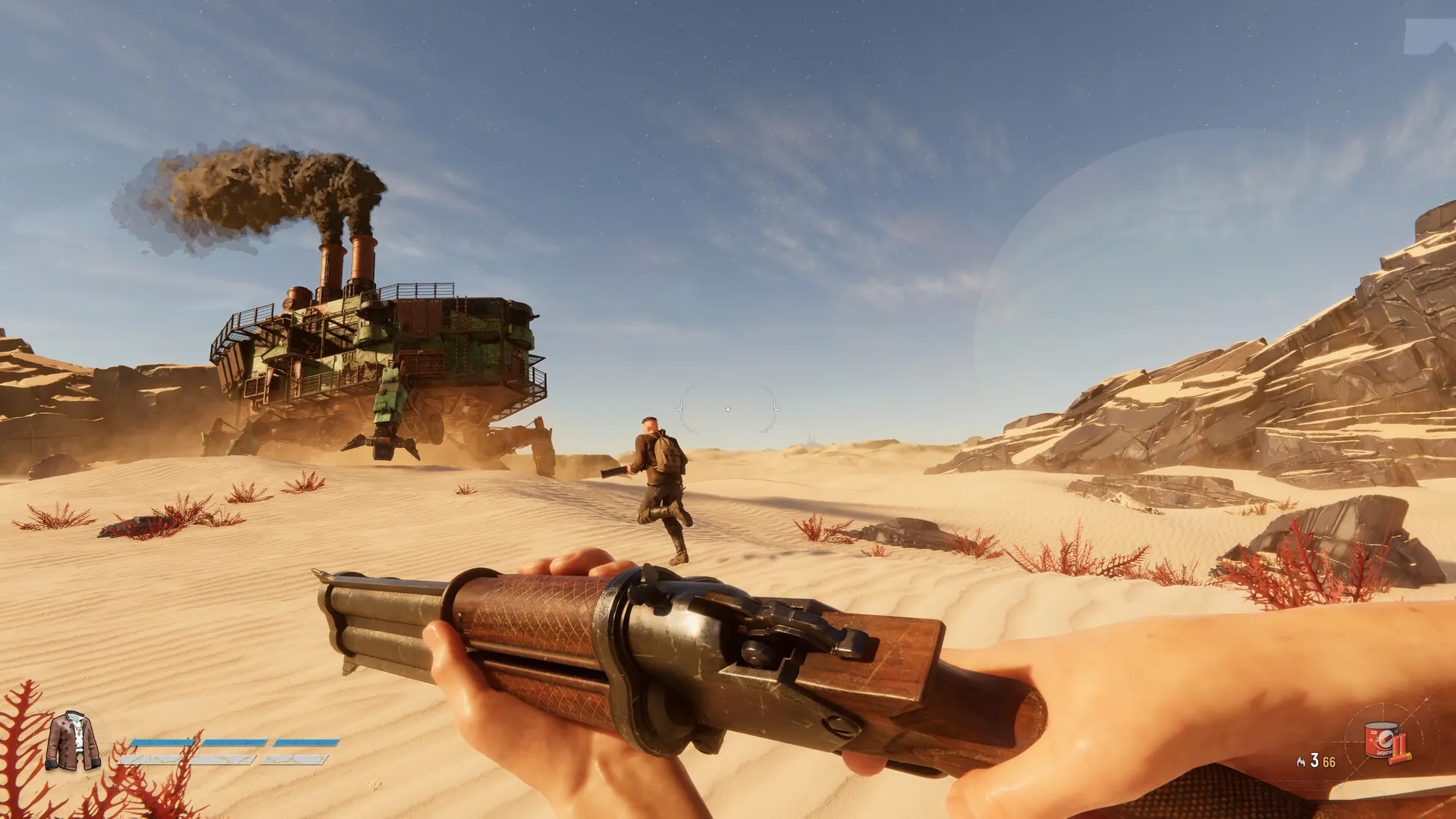
Keep turning room
Park with two departure headings when possible. A Dreadnought approach that leaves the Trampler nose-in against a wall is already losing before combat begins.
Protect repair margin
Repair the systems that preserve movement and departure first. Optional damage or extra cargo is less important when the return route is contested.
Assign roles
Give one player navigation, one exterior watch and one key or loot responsibility. Solo players should shorten every stop because they cannot cover all three jobs at once.
A safer Dreadnought route framework
The route below is intentionally adaptable. It combines the Dreadnought search intent with the existing map and extraction guides without inventing a fixed coordinate route.
1. Mark the return line first
Before entering the objective area, identify a ridge, ruin, smoke column or other durable landmark that points back toward the extraction line. If the route can only be remembered from the outbound angle, it is not yet a reliable route.
2. Scout the final approach
Use elevation and short peeks to check whether the nearest door is watched, whether a rival Trampler owns the open ground and whether your machine can reverse or turn. Information is worth more than one extra crate when the approach is exposed.
3. Solve one door at a time
Keep the key carrier and exterior watch close enough to regroup. After each door, pause for a repair, inventory and route check instead of sprinting through the entire chain because the first step worked.
4. Recalculate after the Black Key
The last key changes the value of the run but also changes the attention it attracts. Check cargo space, health, fuel or supplies, enemy information and the safest exit before opening a final room.
5. Leave before the route collapses
A Dreadnought run is successful when the crew extracts useful value, not when it touches every possible container. If the return line is blocked, switch to the next-lowest-risk exit rather than defending a perfect route.
Loot versus extraction: when should you leave?
The Dreadnought creates a powerful completion bias. Once the squad has found one key, it feels wasteful to leave before finding the next one. That feeling is exactly why a simple threshold helps. Compare the value already secured with the cost of another door, the distance to extraction, the machine's movement state and the number of unknown crews between you and safety.
Use the map guide's loop principle: one objective, one controlled route and one exit plan. If the Dreadnought has already consumed the safe route, do not add a second loot destination on the way home. The final minutes should reduce uncertainty, not create a new fight because storage is still available.
Leave with partial profit
A green or blue key plus useful loot can be a successful run when the Trampler is damaged or the squad has lost the return line. Progress is not only the deepest door.
Do not confuse quiet with safe
Silence after a door can mean another crew has not arrived yet. Use the quiet window to move toward cover or extraction, not to stand in the most obvious doorway.
Keep evidence for the next run
If a key, door or objective behaves differently, record the mode, patch, location clue and exact interaction. That turns a failed attempt into a useful update note instead of a rumor.
Common Dreadnought mistakes
Most failed runs are decision failures before they are aim failures. Fix the route and information problem first.
Searching in the wrong mode
The team follows a Dreadnought video while running a different mode or objective state.
Better move: Confirm Storm Dive and the live objective before crossing the map.
Treating a community coordinate as permanent
A screenshot or guide says where the encounter was once found, so the squad ignores current map signals.
Better move: Use the report as a clue, then verify terrain, objective text and update date.
Parking the Trampler at the door
The machine is close to the loot but has no turning room or second departure heading.
Better move: Park with a covered fallback and keep the exit pointed toward open travel space.
Splitting for the next key
The key carrier disappears into a building while the rest of the crew cannot watch the approach.
Better move: Shorten the search, keep an exterior watch and regroup after each door.
Calling a missing spawn an outage too soon
One squad sees no Dreadnought and assumes the whole game is broken.
Better move: Check mode, patch, objective text and multiple reports before using the server-status workflow.
SAND Raiders of Sophie Dreadnought FAQ
How do I find the Dreadnought in SAND Raiders of Sophie?
Start by checking the current mode and late-raid objective. Community guides associate the encounter with Storm Dive and a multi-door extraction route. Use durable landmarks, ridge scouting and the current objective text rather than trusting one fixed coordinate.
Does the Dreadnought spawn in every SAND Raiders of Sophie game?
Do not assume it appears in every match or every mode. Public guides describe a Storm Dive end-of-raid context, while exact spawn rules remain version-sensitive. Check the current objective and record the patch before treating an absence as a bug.
Where is the Dreadnought located?
There is no stable official coordinate list in the sources reviewed for this page. Look for the current end-of-raid objective, large terrain or structure clues and a safe approach from elevation. Use the SAND map guide for route planning, not a copied coordinate as a guarantee.
What are the Dreadnought key colors?
Community walkthroughs commonly discuss a green, blue, red, white and black door chain. The order and exact acquisition details can change, so use the colors as a checklist and verify the live interaction rather than treating the table as official permanent data.
Is the Black Key required for the Dreadnought?
The Black Key is frequently discussed as the highest-commitment step in community routes, but the exact requirement and reward should be verified in the current run. A key is only useful if the crew can carry it back through the chosen extraction route.
Should I take the Dreadnought route in Voyage Mode?
Current community sources associate the Dreadnought with Storm Dive rather than the lower-risk Voyage Mode loop. Check the current in-game objective before committing; if the objective is not present, use Voyage Mode to learn general extraction and Trampler movement instead.
What should I do if the Dreadnought does not appear?
Record the mode, patch, time and exact objective message, then compare more than one current report. If many players report the same missing objective, check the server-status guide and official Steam news. If only one squad is affected, investigate mode or session state first.
Sources and verification
Official game and Steam pages were checked for the game's current Early Access context. Dreadnought door and spawn details are attributed to community or editorial guides and are not presented as official guarantees.